


7 Rustic Log Cabin Fence Ideas to Enhance Your Irish Property
Published: 25.09.2026 / Last updated: 24.09.2026
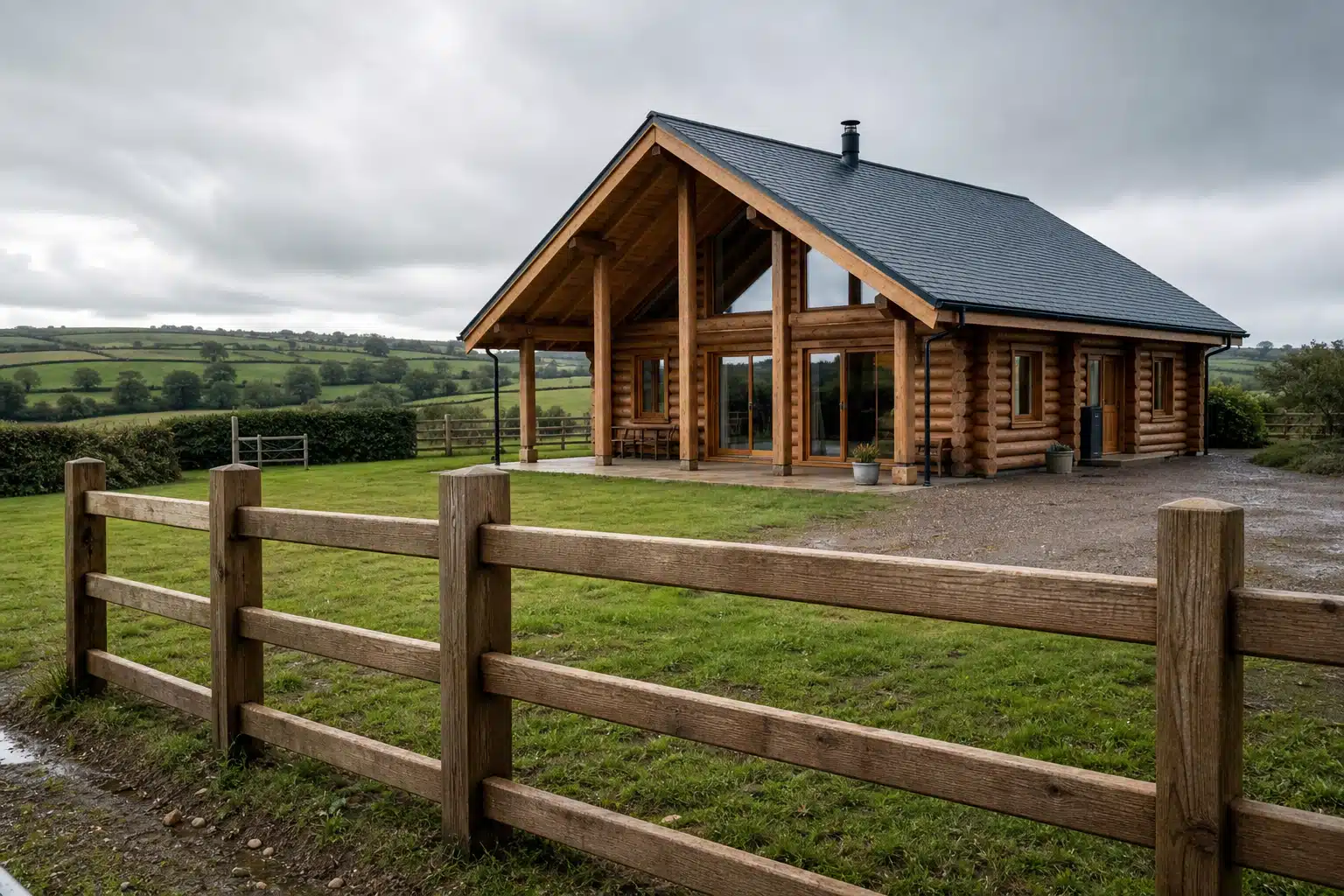
A well-crafted log cabin brings warm, natural character to any garden or rural plot in Ireland. Standard panel fencing from a suburban hardware store often feels out of place against solid timber walls. Choosing boundary fencing that reflects the organic texture of wood and stone preserves the natural charm of your building while defining borders, securing pets, and adding privacy.
Whether surrounding a modest garden room or a large residential log home, these seven rustic fence ideas fit naturally into Irish landscapes.
1. Classic Post-and-Rail Fencing
Post-and-rail fencing is a timeless staple across rural Ireland. Its open structure defines property lines without blocking countryside views or sunlight. Using thick square or rounded timber posts paired with two or three horizontal rails mirrors the solid wood lines of traditional log structures.
For added containment, such as keeping small dogs inside the yard, a subtle wire mesh can be attached along the interior face of the rails. Pressure-treated softwood or durable native timbers like larch and Douglas fir provide excellent longevity against wet soil conditions.
If you are establishing a spacious layout around a multi-room building or sleeping loft model, an open post-and-rail perimeter creates an estate-style border that highlights your cabin from a distance.
2. Split-Log Horizontal Slat Fencing
Split-log fencing uses logs halved down the centre, mounting the rounded face outward along sturdy vertical posts. This design directly echoes the stacked exterior timber walls of a log building, creating visual continuity across your entire site.
Arranging split logs horizontally with small gaps between them softens strong winds across open ground while maintaining partial privacy. This boundary design pairs smoothly with our range of residential bedroom cabins, establishing a cohesive rural homestead aesthetic.
3. Traditional Dry-Stone Wall and Timber Combination
Combining local stone with timber posts creates an authentic, long-lasting boundary feature. A low dry-stone wall, constructed from fieldstone or local granite, forms the base, topped with horizontal timber rails or low wooden pickets.

This hybrid approach keeps the wood elevated off damp ground, extending its lifespan while rooting the plot in traditional Irish masonry styles. It works particularly well along front garden boundaries, giving structured curb appeal to compact garden houses and summer retreats.
4. Living Willow Fencing (“Fedge”)
A “fedge” is a living hybrid between a fence and a hedge, constructed by weaving live willow rods directly into the soil. According to RHS living willow guidance, willow rods should be planted between winter and early spring in moist soil. They are pushed at least 30 cm deep at alternating 45-degree angles to form a criss-cross lattice.
In spring, the stems burst into leaf, forming a dense green barrier that blends naturally into Irish gardens. Living willow acts as a natural windbreak and requires a light trim each winter to maintain its shape. For property owners interested in eco-friendly land management or updating older plots alongside broader log home renovations, a living willow boundary brings wildlife and natural screening right to the edge of the cabin.
5. Picket Fencing with Native Irish Hedgerows
A traditional wooden picket fence provides soft perimeter demarcation while allowing light to pass through freely. Placing a native hedgerow, such as hawthorn, blackthorn, holly, or rowan, directly behind the picket fence creates a secure, wildlife-rich boundary over time.
As recommended by the All-Ireland Pollinator Plan, native flowering hedges offer vital food and shelter for birds and bees. The picket fence keeps the boundary clean and secure while young hedgerow saplings establish over their first few seasons.
When installing fencing near social areas like an outdoor patio or a covered deck, explore our guide on creating an outdoor seating area to ensure your boundaries match your garden layout.
6. Dark-Stained Vertical Timber Privacy Fencing
If your log cabin serves as a guest annexe, home office, or rental retreat, complete visual privacy may be a priority. Instead of standard overlap panels, opt for heavy vertical timber boards with slightly rustic rough-sawn edges.
Treating the timber with a rich dark brown or charcoal wood stain helps the boundary recede into surrounding foliage while matching darker roofing finishes or window trims. This clean, modern-rustic look pairs exceptionally well with double-storey timber buildings and lofted cabins.
7. Woven Branch and Hurdle Fencing (Wattle)
Wattle fencing, crafted from woven hazel or willow hurdles, is one of the oldest fence styles in Ireland. These prefabricated woven panels offer a textured, artisanal backdrop that complements untreated or natural-stained Nordic spruce log walls.

Hurdles filter strong winds rather than blocking them entirely, which reduces wind resistance during winter storms. Their warm, earthy tone blends naturally with outdoor timber decor and garden planting. For further styling inspiration around timber structures, see our guide on log cabin decoration ideas.
If you are setting up a larger family property with multi-bedroom log cabins, incorporating woven hurdle panels along garden zones creates distinct, sheltered outdoor nooks across your plot.
Irish Planning Regulations and Timber Maintenance Guidelines
Before selecting and constructing your log cabin fence, keep key Irish planning rules and statutory guidelines in mind:
Planning Exemptions for Fences and Walls
Under S.I. No. 600/2001 Planning Regulations (Class 5 Exempted Development), constructing or altering a wooden fence or wall within the curtilage of a house is generally exempt from planning permission provided specific limits are met:
- The height does not exceed 2 metres for side and rear boundaries.
- The height does not exceed 1.2 metres for fences or walls situated in front of the house.
- The structure does not create a traffic hazard or obstruct public rights of way.
Hedgerow Regulations and Wildlife Protection
Under Section 40 of the Wildlife Act 1976, destroying or cutting hedge vegetation is strictly prohibited between 1 March and 31 August each year to protect nesting birds, as outlined in Government of Ireland statutory guidance. Plan any major boundary clearing or hedge planting between 1 September and 28 February.
Timber Treatments
For ground-contact posts, brush-on wood preservatives are insufficient for long-term rot prevention. Choose factory pressure-treated timber posts certified to Irish standards (such as I.S. 436). Purchasing creosote-treated timber posts or rails has been prohibited in Ireland since April 2023, so modern eco-friendly pressure treatments should always be selected.
Categories:
Ideas & Inspiration
Transform your log home with 7 ceiling design ideas, including exposed vaulted beams, tongue-and-groove planking, whitewashed timber, and acoustic panels.

Discover 9 inspiring rustic cabin design ideas for small timber homes. Maximize your space, natural light, and style with practical layout solutions.

Discover 8 inspiring front porch decorating ideas for log cabins. Learn how to style your entrance with weather-resistant seating, lighting, rugs, and plants.

Discover creative garden pod ideas for Irish homeowners. From garden offices to guest suites, learn how to expand your living space without an extension.
Want to discuss over phone. Let us call back to you
If you need any additional info regarding any product, please fill in the below form and we will get back to you, usually the same or next working day.
Have any questions regarding some product?
If you need any additional info regarding any product, please send us your questions.